Mental illness is something that every person struggles with individually and should be understood by all. No one should be shunned because of their depression, or schizophrenia, or any other disorder, yet they still are.
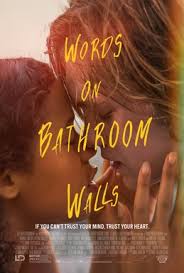
Words on Bathroom Walls, directed by Thor Freudenthal and based on the book by Julia Walton, explores this idea of acceptance and understanding through a teenager, Adam (Charlie Plummer), who is diagnosed with schizophrenia in his senior year of high school.
The movie follows his own personal journey to being open about his struggles as he simultaneously falls in love with a girl at his new school, Maya (Taylor Russell).
Everything from the CGI to visualize Adam’s hallucinations to the character chemistry made this movie such an interesting watch. It’s the basic cheesy teen-romance story, with another element added onto it.
Plummer did an amazing job playing Adam, and as an audience member, I can see how much effort he put into this role. He did a spectacular job at portraying schizophrenia without being judgmental or stereotypical, which is hard to do as someone not suffering with it.
His co-star, Russell, also did very well, portraying the feelings of an outsider on this situation, watching his breakdowns without knowing what they are or how to help. The actors had insanely good chemistry and genuinely seemed to like each other, making the whole performance believable.
His coworker and on-screen love interest has also received praise for her role, saying she was a “light in Adam’s life.” Russell herself was originally drawn to the role by Maya’s fierce but supportive nature, and following her roles as Emily in Waves, she has really proven herself in roles of smart, complicated young women.
The movie does a great job of capturing how much schizophrenia can dominate someone’s life, yet manages not to make it Adams entire personality. He has other interests and goals besides curing his illness, such as cooking and becoming a chef, and portrays regular teenage emotions, which makes him easier to connect to.
Some interesting choices the movie makes include the reality of medications, even with modern medicine, and how there is no true cure, nor any solutions that don’t come with sacrifice.
Another cool decision was when Adam goes to therapy every week, instead of showing them talking, his therapist is behind the camera, and it appears like he is talking directly to the audience. This choice makes watchers feel more connected to him, listening more to his feelings and almost having a conversation with him in our heads.
Although the movie is primarily about Adam, there are other important topics addressed outside of his connection to the illness, including the bullying he faced after his first breakdown in school and the stigmas he was associated with.
Words on Bathroom Walls also captured the experiences of family and friends of mentally ill people, showing the passion Adam’s mom has in getting him better and her worry after each of his breakdowns.
In the end, though not totally realistic, I like that a happy ending was written, as it gives hope to people with schizophrenia or other life-altering mental illnesses that they, too, can live a normal life. I totally recommend this to all romance/coming-of-age film lovers, as it was both beautiful and sweet.