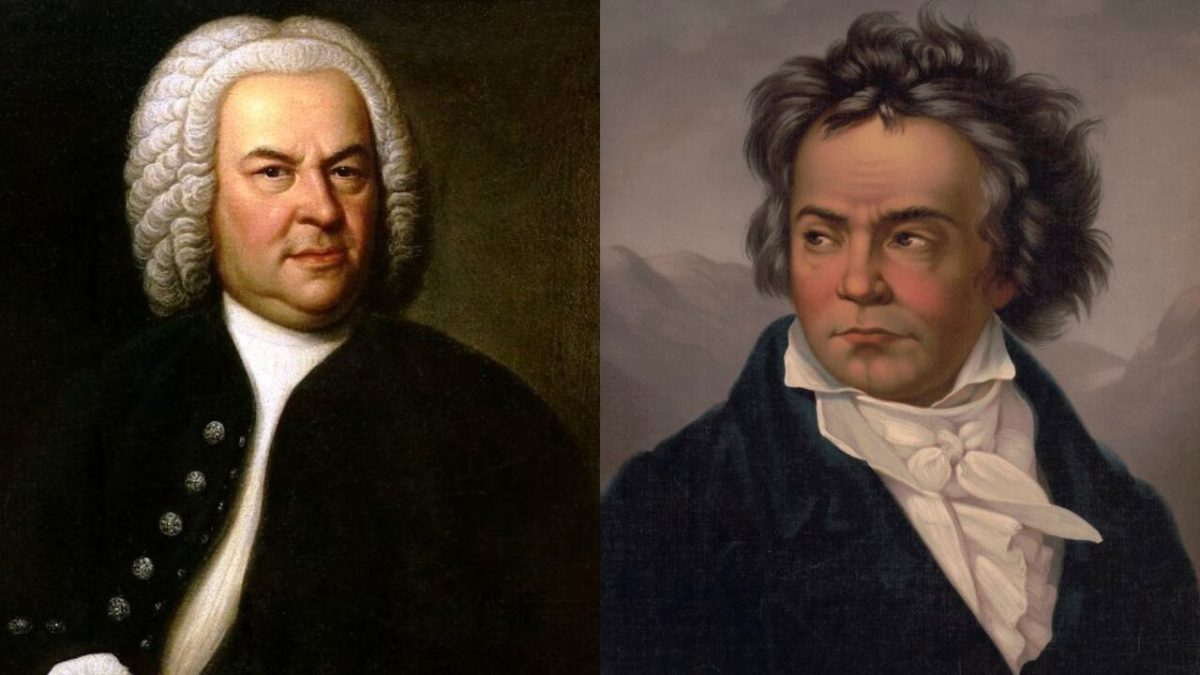
Ever since Beethoven, symphonies have been hallmarked as monumental works of grand construction, detail, emotion, and meaning. Prior to his entrance, composers like Mozart and Haydn wrote dozens, maybe even hundreds of symphonies over their lifetimes. After Beethoven’s death, Brahms famously took over twenty years to finish his first symphony.
Though Beethoven lit the flames of the musical movement of Romanticism, afterwards his fellow Germans formed two opposing musical camps: the old and new German schools. The old German school consisted of composers like Mendelssohn, Schumann, and Brahms, whose commitment to absolute music (music for music’s sake) and in more tightly conforming to traditional compositional structures separated them from the new German school, with composers like Liszt and Wagner. These more progressive icons aren’t as well known for their symphonies, of which they composed few, as they are for their programmatic music, music that tells a specific story or narrative (as opposed to absolute music, in which the notes are all the music is made of). Wagner, for instance, while having completed only one symphony wrote over ten hours-long operas.
The new German school was also known for experimenting with harmony and its rules, something that the symphonists Anton Bruckner and Gustav Mahler would take inspiration from and carry on. These two composers, also in the German tradition, were known for their colossal symphonies, consisting of massive orchestras and often spanning over an hour in length. Their last works, such as Bruckner’s ninth symphony and Mahler’s tenth, can be thought of as the last component of the long bridge to modernism, where composers like Arnold Schoenberg ditched the traditional rules of music and harmony altogether.
But the symphony is not only a German creation. Take, for instance, the fifth symphony of Tchaikovsky, a Russian composer, known for its lush melodies and broadly emotional journey. Rachmaninoff, also Russian, seemed to have carried on this tradition, bringing even more sentimentality and Romantic emotion in his second symphony. Dvorak mixed Czech folk music with these German musical forms perhaps most masterfully in his eighth symphony. “Having played Dvorak’s eighth in youth orchestra last year, I can attest to Dvorak’s wondrous incorporation of folk music into the grand structure of a symphony,” says senior clarinetist Ian Kwon. The Finnish Sibelius, experimented with tone colors and the perfection of Beethoven’s symphonic form in his seven symphonies, while the English Vaughan Williams extended the impressionism of Ravel into his nine.
Each of the composers I’ve listed in this article has their own style, distinct enough even to be considered separate genres themselves. The mass amount of information I’ve presented here might also seem overwhelming, in which case the best thing to do might be to, for a moment, forget it all and put your finger atop one composer’s name, pick one of their works, and listen. Music, after all, is an art, made to express what words alone, at least in this very form, cannot.