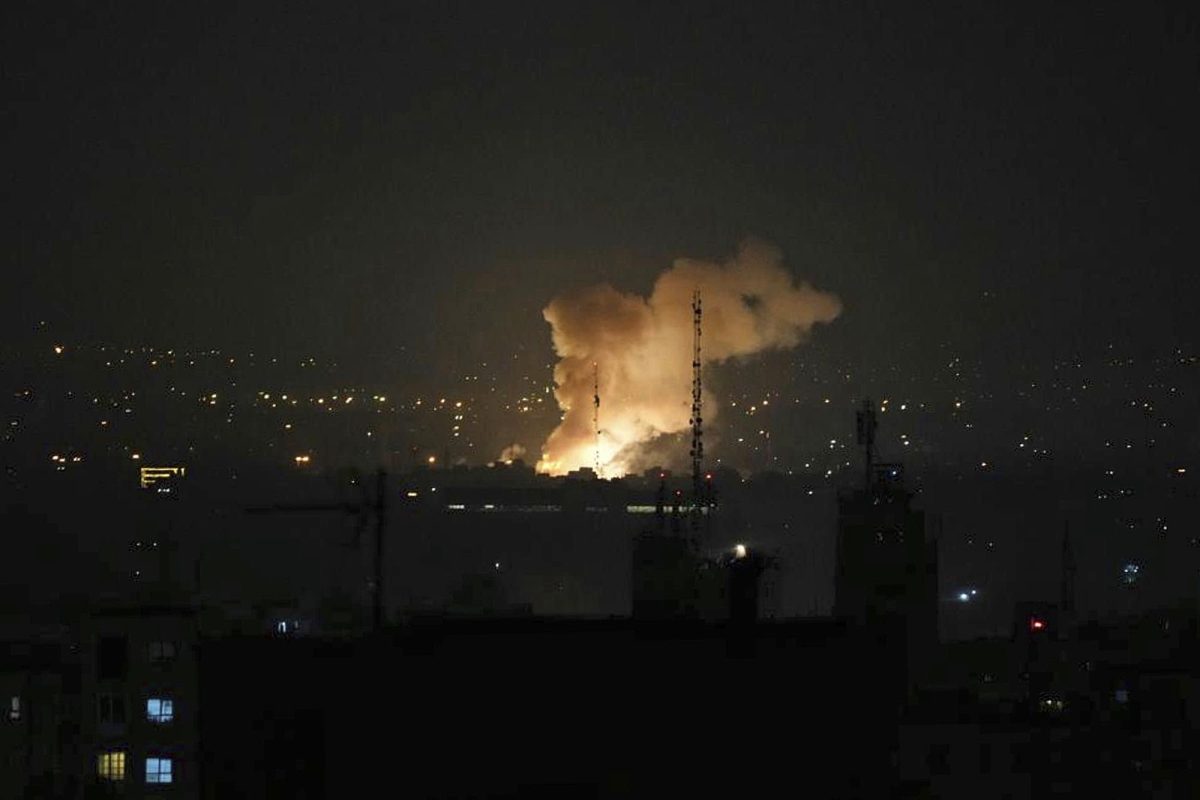
On February 28th, 2026, the United States and Israel dashed Iran with a series of airstrikes, killing its supreme leader Ali Khamenei and marking the beginning of yet again another American war in the Middle East. Responses within Iran were mixed—some mourned Khamenei’s death and others celebrated. Some outside Iran also celebrated, Khamenei having prolonged Iran’s nuclear programs and used violence to crush political dissent, while others actively protested against the war and conflict these strikes would bring.
Since the war began, oil prices have increased by about 42% in the U.S., owing significantly to Iran’s closure of the Strait of Hormuz, blocking roughly 20% of oil shipments worldwide. The oil shortage has additionally led to the U.S. easing sanctions on Russian oil, imposed in opposition to its invasion of Ukraine.
It is thus unsurprising that this war in Iran is already one of the most unpopular in our country’s history. Wayne Hills High School senior Ian Kwon is not very optimistic about the wars prospects either: “Looking historically at the U.S.’s track record in Middle East, the U.S. has done much more harm than good. Look at Afghanistan, for example.” He adds that “the last time where we intervened and actually helped the people there was in Kuwait in 1991.”
As oil prices continue to hike, the U.S. economy continues to strain, and more people die, one can only hope for an end to this war that will not leave behind yet another trail of destruction.