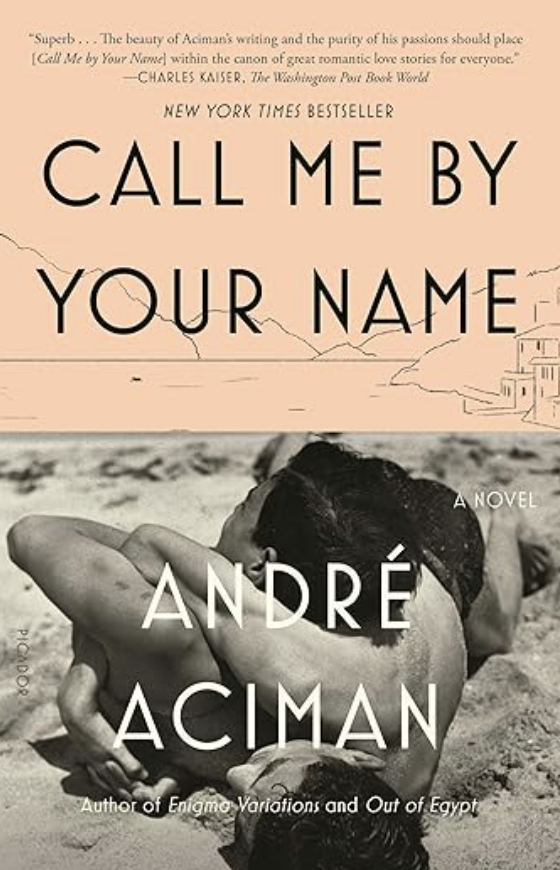
I’ve never read a book that made me more aware of my thoughts than Call Me By Your Name. The 2007 novel by André Aciman, which was later adapted into a film, follows 17-year-old Elio during a summer in northern Italy as he develops a complicated relationship with Oliver, a 24-year-old American graduate student staying with his family.
One of the book’s greatest strengths is its setting. Aciman’s descriptions of the setting are so detailed and immersive that it will make you feel as though you are experiencing the summer alongside Elio.
What made the novel so interesting isn’t the plot—but the intensity of Elio’s inner life, as he replays and analyzes every interaction to the point where it’s overwhelming.
In this novel, getting to know Elio felt like getting to know a person in real life–the books almost reads like access into someone’s mind. His motivations and anxieties are presented so well that his inner thoughts become the story itself.
Some reviews online would say that Call Me By Your Name is a boring novel. I understand where these people are coming from, but I disagree. If you’re into a typical plot-driven story, then I wouldn’t recommend this book. There isn’t much plot and the novel is entirely character-driven.
Continuing on that, I find most plot-based books very rushed. While the stories are typically more interesting, we don’t learn a lot about the characters beyond some surface-level information. Recently, it has felt like authors are competing to have the most complex plot and intense writing.
In contrast, a simple and introspective book like Call Me By Your Name stands out. It simply covers the thoughts of a young boy falling in love—and often, the thoughts of a human are a lot more complex than any fantasy plot.
If I were to compare this book to another, I would say Sunburn by Chloe Michelle Howarth is a perfect comparison. It explores a similar theme, and isn’t plot heavy at all. If you enjoyed Sunburn, Call Me By Your Name would be a great read for you and vice versa.
Personally, I would say that Call Me By Your Name is a little bit better, mainly because I find Elio a lot more likable than Lucy was seeing how we get more explanations as to why he’s doing things—and he isn’t actively going after things he doesn’t want.
One reason I think Call Me By Your Name works so well compared to Sunburn is because of how clearly we’re placed inside Elio’s mind. In Sunburn, we do experience Lucy’s thoughts directly, but some of her choices can feel frustrating to read. But me not understanding it doesn’t mean the writing is bad; someone who has been in a similar situation would most likely understand her motivations.
This contrast highlights just how accessible Elio’s perspective is. In Call Me By Your Name, Elio’s thoughts are easy to follow and deeply relatable for anyone, which makes the story feel more immersive.
Call Me By Your Name has quickly become one of my favorite books to reread. Aciman’s descriptive writing is what really makes the story. If you’re someone who tends to overthink and are looking for a book that will make you feel seen, this is what I would recommend. It’s very easy to see parts of yourself in Elio, and the setting of northern Italy really brings the whole book together.